How to Count Calories in Indian Food (The Complete Guide)
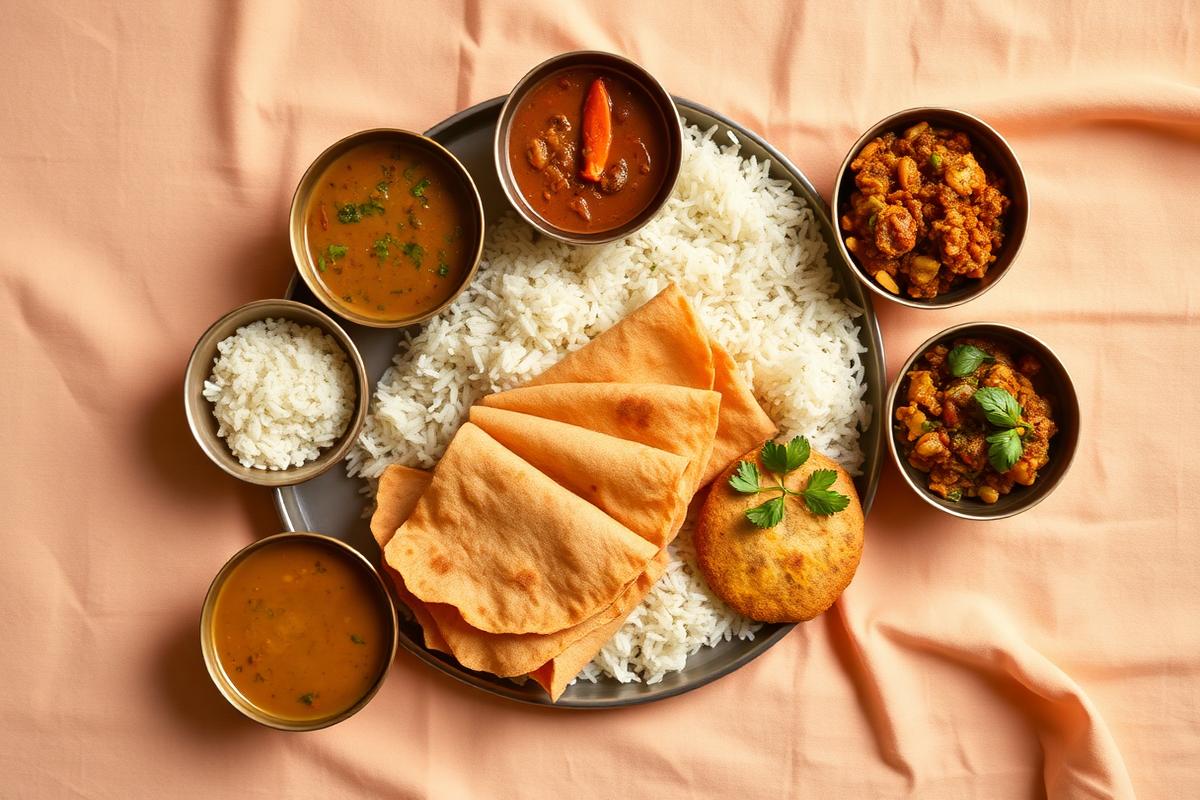
Counting calories in Western foods is easy — most packaged items have a label, and apps like MyFitnessPal have decades of data on them. Indian food is a different problem. Dal, sabzi, roti, biryani — they come in dozens of regional variants, and a "medium bowl" in Mumbai is not a "medium bowl" in Hyderabad. Here is the practical way to count calories in Indian food without going insane.
Why standard apps struggle with Indian food
Standard calorie databases were built for Western diets. They handle oatmeal and chicken breast well, but a homemade dal can vary 40% in calories depending on the oil and ghee used. The fix is twofold: use an app with a real Indian food database, and learn a few rules of thumb so you can estimate when you cook at home.
The 4 rules of estimating Indian meals
- Count the cooking fat. A teaspoon of oil or ghee is ~40–45 kcal. Tarka, tempering, shallow-frying — they add up. Most underestimates come from invisible fat.
- Measure rice and roti. A standard chapati (30g flour) is ~70 kcal; a katori (150g) cooked basmati rice is ~200 kcal. Use a scale once or twice; you will eyeball it forever after.
- Treat sabzi separately from gravy. A dry sabzi is often ~120 kcal/katori; a creamy gravy (kaju, malai, butter) can be 250–400.
- Snacks bite hard. 4 samosas = a full meal. 100g mixture or namkeen = ~450 kcal. Snacks are where most people blow their calorie budget.
Calorie counts for 20 common Indian foods
Approximate counts for typical Indian portion sizes:
- 1 chapati / phulka (30g flour) — ~70 kcal
- 1 paratha (plain, with 1 tsp oil) — ~150 kcal
- 1 katori cooked basmati rice (150g) — ~200 kcal
- 1 katori dal tadka (200g) — ~180 kcal
- 1 katori rajma — ~210 kcal
- 1 katori chole — ~230 kcal
- 1 katori dry aloo sabzi — ~140 kcal
- 1 katori palak paneer — ~270 kcal
- 1 katori butter chicken (gravy + 80g chicken) — ~340 kcal
- 1 idli (medium) — ~40 kcal
- 1 plain dosa — ~120 kcal
- 1 masala dosa (medium) — ~250 kcal
- 1 katori poha (cooked, 200g) — ~250 kcal
- 1 katori upma — ~270 kcal
- 1 plate chicken biryani (350g) — ~520 kcal
- 1 plate veg biryani (350g) — ~450 kcal
- 1 samosa (medium) — ~250 kcal
- 1 plate pav bhaji (2 pav + 1 katori bhaji) — ~520 kcal
- 1 katori sweet curd (100g) — ~100 kcal
- 1 piece gulab jamun — ~150 kcal
These are averages — your home cook's recipe may differ by 15–20%. Logging the same dish a few times will calibrate it.
The easiest way: log it inside an app
Manually adding all this is tedious. The fastest workflow is to use a tracker that already has Indian foods built in. TrackFlow's nutrition tracker includes the items above (and a growing list of regional dishes) with per-portion calorie and macro values, plus barcode lookup for packaged foods. Once your common meals are in your recents, logging an Indian day takes under a minute.
Set the right target before you start counting
Counting calories with no target is just counting. Figure out your actual daily calorie and macro goals first — our free macro calculator for Indians does it in 30 seconds.
Track it inside TrackFlow
TrackFlow puts everything in this guide into a daily app — free on iOS and Android.
Get TrackFlow free →